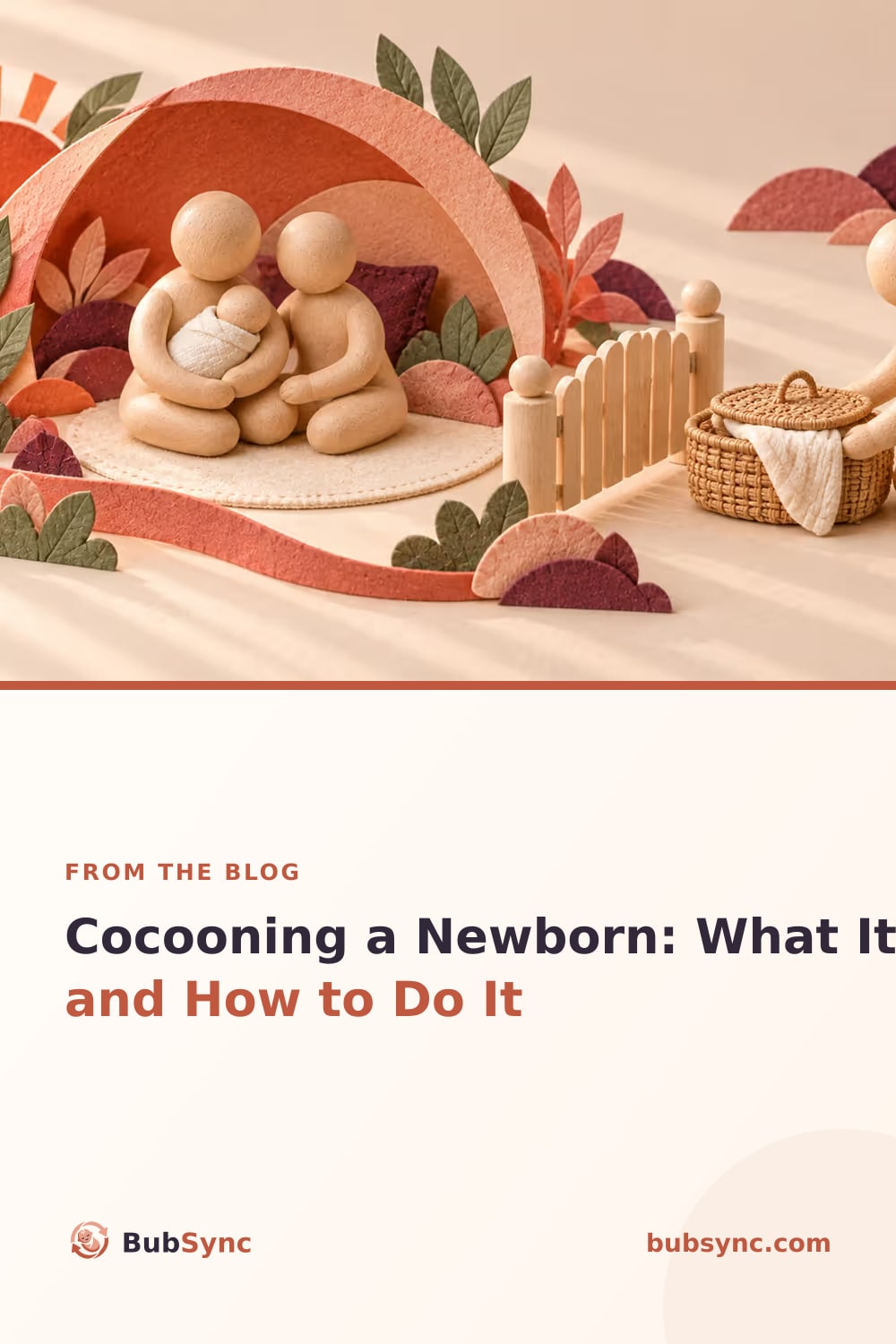
What is cocooning a newborn?
Cocooning means keeping life small and quiet in the first weeks after a baby arrives: fewer visitors, fewer outings, and more time at home bonding, feeding and recovering.
You will see the word used in two ways, and it helps to know the difference:
- Social cocooning, the current trend: limiting visitors and trips out while your baby is very young.
- Vaccine cocooning, the older public-health meaning: making sure the people close to a baby are up to date on vaccines such as whooping cough (pertussis) and flu.
Media coverage this year, including reports from Fox News and Western Mass News, describes social cocooning growing in popularity and, in some families, causing tension with grandparents and friends.
Is cocooning new?
The word is getting new attention, but the idea is not new. A Massachusetts pediatrician quoted by Western Mass News said the practice has been recommended for years, and pointed to an American Academy of Pediatrics handout asking friends and family to hold off visiting until a baby's immune system matures.
Cultural traditions of a rest period after birth exist in many parts of the world. What is different now is that social media gives parents a name for it and a way to say, "this is a choice we are making."
Why parents are doing it
Reasons parents commonly give include:
- Infection risk. Newborns have immature immune systems, and a fever in a very young baby can be serious.
- Recovery. Birth, surgery, feeding challenges and broken sleep are a lot to manage while hosting.
- Bonding and feeding. Quiet time makes it easier to learn your baby's cues.
- Parental leave. One psychotherapist quoted by Fox News linked the trend's growth to more generous leave for dads, which gives both parents time at home.
- Overwhelm. After years of highlight-reel parenting online, plenty of parents simply want to skip the performance.
What the evidence says (and does not)
Be wary of anyone who claims cocooning is either essential or harmful. Here is the honest picture:
- Limiting exposure to illness in the first weeks has medical support, and the sources we reviewed broadly agree on that.
- The stricter "no vax, no visit" rule is more contested. A University of Sydney commentary argued there is no evidence that it adds protection for the baby, and that social isolation can contribute to postnatal depression.
- We did not find formal research comparing outcomes for babies whose parents limit visitors and those whose parents do not. Most of what exists is commentary and guidance, not trials.
So the sensible middle ground is a short, flexible pause with support built in, not total isolation. If your doctor has given you specific advice for your baby (for example, a premature baby), follow that over anything here.
How to cocoon without the family drama
Boundaries land better when they are clear, warm and specific. A few approaches parents use:
- Decide your rules before the birth. Agree with your partner on who, when and for how long.
- Tell people early. "We are keeping things quiet for the first few weeks" is easier to hear in pregnancy than from a hospital bed.
- Blame the plan, not the person. "Our pediatrician suggested we keep visitors minimal" is hard to argue with.
- Offer a role. Dropping off a meal, running a load of laundry or walking the dog are all visits that help, and none need holding the baby.
- Use video calls. Grandparents often care most about seeing the baby's face.
- Ask visitors to be well. Anyone sick stays home, and everyone washes hands first.
- Set a review date. "Let's revisit at six weeks" turns a closed door into a pause.
Look after yourselves too
Cocooning should not mean coping alone. Keep at least one or two people in your circle who can check in, and stay in touch with your midwife, doctor or health nurse. If you feel persistently low, anxious or unable to cope, speak to a health professional. Postnatal depression and anxiety are common and treatable, and they can affect partners too.
Common questions
How long should I cocoon a newborn? There is no universal rule. Many parents choose somewhere between two and six weeks. Ask your pediatrician what suits your baby and your season, since illness risk changes with time of year.
Can my newborn go outside? Fresh air is generally fine. The usual advice is to avoid crowded, enclosed places in the early weeks. Check with your doctor for your situation.
Should visitors be vaccinated? Many pediatricians recommend that close contacts are up to date on whooping cough and flu vaccines. Asking is reasonable, but how strictly you enforce it is your call.
Is cocooning bad for new parents? It can be if it becomes isolation. Keep some connection and support in place.
Make cocooning easier with BubSync
A quiet few weeks work best when everyone who does see the baby stays on the same page. BubSync gives you one shared timeline for feeds, sleep and nappies, so your partner, a grandparent or a carer can see what has happened without a stream of "when did she last eat?" messages.
- Hand-offs without the questions, because the timeline shows the last feed and nap
- Family sharing with only the people you choose
- Works offline, so logging does not depend on a signal at 3am
- Spot patterns early, with our guides to tracking baby sleep and the first three months
Partners can also read our guide on supporting a postpartum partner.
See the full feature list or what BubSync costs.
Start tracking with BubSync and give your first weeks a little more calm.
Sources
- Fox News: "Cocooning" is growing in popularity with new parents
- Western Mass News: New parents creating "cocoons" for babies, sparking family tensions (29 January 2026)
- SheKnows: Cocooning parenting trend
- University of Sydney: "No vax, no visit"
This article is general information, not medical advice. Speak to your doctor, midwife or pediatrician about your baby.