A five-fold jump in searches for "boring" content, on purpose
Somewhere in Google's search data sits a strange-looking line: worldwide interest in "low stimulation shows for toddlers" has climbed roughly five-fold since early 2023, with related terms like "calming cartoons for kids" and "bedtime animation" following the same curve. Parents are not searching for more stimulating content for their kids. They are actively searching for less of it.
That search pattern is the visible edge of a much broader 2026 movement parenting writers have started calling "low-stim parenting": a deliberate reduction in the sensory noise around babies and young children, on the theory that a calmer environment produces a calmer, more regulated child. If you've noticed nurseries trending toward sage and terracotta instead of primary-colour plastic, or felt a small urge to declutter the toy basket down to the pieces that don't light up or beep, you're already inside the trend.
What "low-stim parenting" actually means
Low-stim parenting is not a formal parenting method with a founder or a manual. It's a loose but consistent set of choices, all aimed at cutting the amount of unnecessary sensory input competing for a baby's attention:
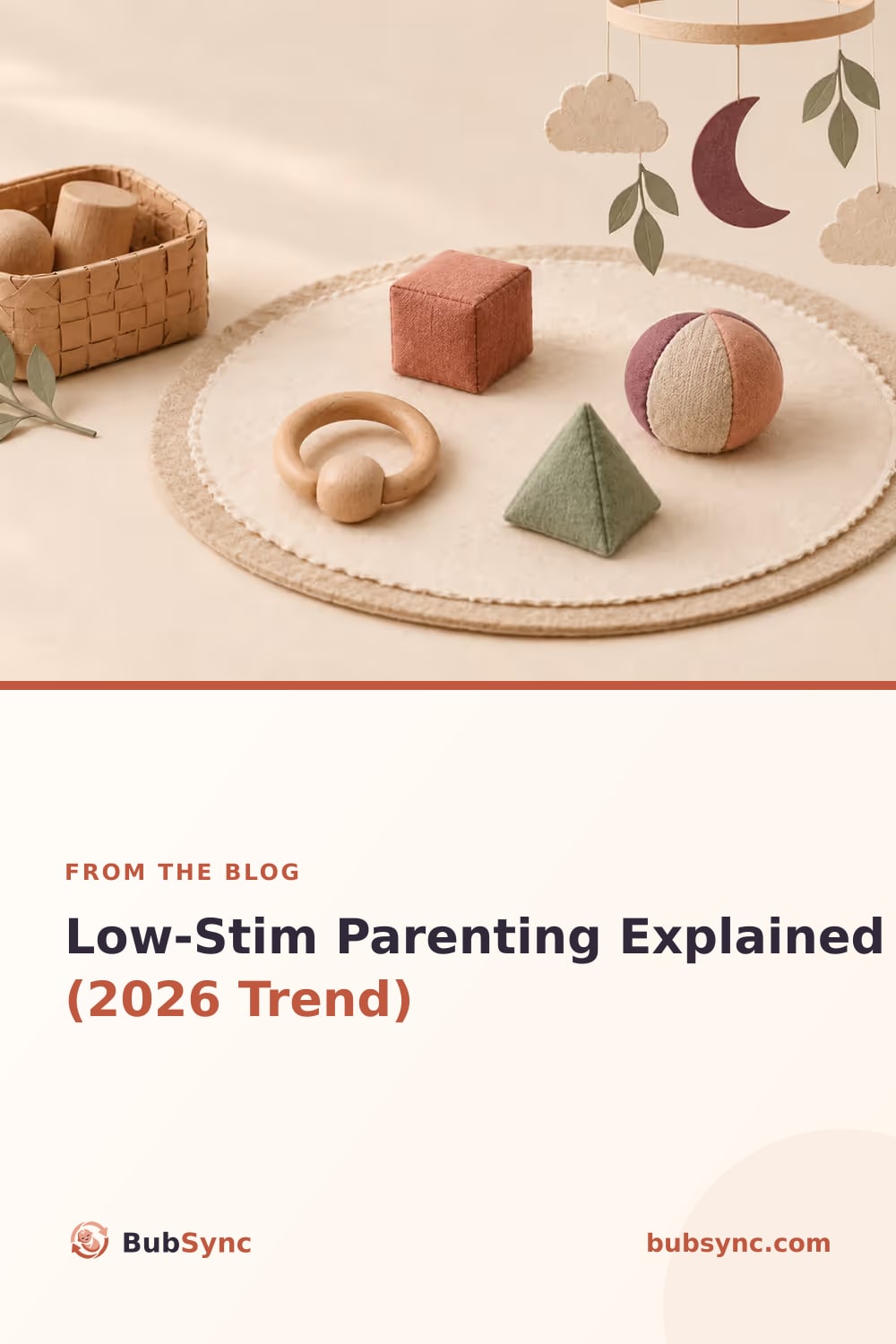
- Visual: Muted, earthy tones (sage, oat, terracotta) in nursery decor and clothing, in place of neon plastic and cartoon branding.
- Auditory: Analog toys (wooden blocks, cloth books, simple rattles) instead of battery-powered toys with electronic sound effects and flashing lights.
- Olfactory: Fragrance-free or naturally-derived skincare and laundry products, replacing synthetic "baby-scented" perfumes.
- Environmental: Decluttered play spaces, warm low-wattage lighting instead of bright overhead light, and fewer toys left visible at once rather than a full bin dumped on the floor.
The underlying idea is that a baby's nervous system is still developing the capacity to filter and process input, and that a lower-noise environment leaves more of that capacity free for sleep, feeding and settling, rather than triage.
Why this is the trend of 2026, specifically
Three things converged this year. First, the "going analog" wave (parents pulling back from screens and constant digital stimulation for themselves and their kids) has been building since 2024, and low-stim parenting is its natural extension into the physical nursery, not just the screen. Second, Pinterest's own 2026 trend report identified "screen-smart kids who seek real-world adventure" as a defining theme of the year, describing parents actively curating quieter, more tactile childhoods rather than defaulting to whatever entertains fastest. Third, it dovetails with 2026's broader "less is more" mood in baby gear: the same instinct driving parents toward smaller, curated registries (rather than one of everything) is driving them toward fewer, calmer toys.
It's worth being honest about where the trend sits: it's a real, multi-sourced cultural shift backed by genuine search data, not a peer-reviewed clinical protocol. No major paediatric body has issued "low-stim parenting" guidelines, and that's a meaningful distinction from something like safe sleep positioning, where the evidence and the guidance are both clear.
Common questions parents are asking
Is low-stim parenting backed by research, or is it just a wellness trend? Both, partially. The broader science of infant sensory overstimulation and the value of predictable, calm environments for settling is well established. What's newer, and less formally studied, is the specific 2026 packaging of that idea into a named trend covering decor, toy choice and scent. Treat the underlying instinct (less noise, more calm) as reasonable, and treat any specific product claiming to be "low-stim certified" with the same scepticism you'd apply to any marketing claim.
Will fewer toys or less stimulation slow my baby's development? Reducing sensory clutter isn't the same as reducing engagement. A baby handed one wooden rattle to explore fully, without three flashing alternatives competing for attention, is still getting rich sensory and motor input, often more focused input than a bin of options offers. The trend is about competing noise, not about withholding interaction, books, talking, or play.
Do I need to renovate the nursery to try this? No. The lowest-cost version of low-stim parenting is simply rotating out a few of the loudest, most light-up toys and seeing whether nap time or settling gets any easier. Nurseries photographed for social media are the aspirational end of the trend, not a prerequisite for trying the underlying idea.
Is this the same as "low stimulation" in a clinical or sensory-processing context? Not quite. Sensory processing differences and clinical overstimulation are assessed and managed by paediatricians and occupational therapists on a case-by-case basis. If you have a specific concern about your baby's reaction to noise, light or texture, that's worth raising with your GP or child health nurse directly, rather than treating a lifestyle trend as a substitute for that conversation.
Trying it without turning it into another thing to optimise
The honest risk of any named parenting trend is that it becomes one more performance standard to fail at, on top of everything else. The version of low-stim parenting worth keeping is small and boring by design: notice which toys, sounds or times of day seem to unsettle your baby, and quietly do less of that, rather than chasing an aesthetic.
That noticing is easier with a record to look back on. In BubSync, a quick note against a nap or a fussy stretch, like "skipped the light-up toy today, went down easier," builds a pattern you can actually see over weeks, instead of relying on memory of one good afternoon. It's the same instinct behind de-influencing your baby registry: fewer things, chosen deliberately, tend to serve a baby better than more things chosen because they were trending. If sleep is the specific thing you're trying to improve, our baby sleep tracker guide and free wake window calculator cover the parts of settling that are backed by clear evidence, not just aesthetics.
And if you're sharing care with a partner, grandparent or carer, the environment choices only work if everyone's making the same ones. BubSync's family sharing means a note like "we're keeping the overhead light off for the 7pm routine now" reaches whoever's on shift next, instead of getting lost between two phones.
Log what actually helps your baby settle with BubSync, and keep the parts of the trend that earn their place, not the parts that just photograph well.
This article is general information only, not medical or developmental advice. If you have a specific concern about your baby's sensory responses, development, or sleep, speak with your GP or child and family health nurse.